
Panama Qualified Investor Visa 2026:
Navigating the New Rules Under Executive Decree 17
Panama changed its investor residency rules on September 16, 2026. Here is what is different, and what it means if you are buying property to get residency.
Last updated: September 2026 · Reviewed by Panama Visa Expert
Panama's Qualified Investor Visa has changed significantly under Executive Decree No. 17 of September 8, 2026. The new rules change the qualifying thresholds for real estate, introduce a new method for calculating the investment value, impose a five year maintenance requirement, and establish transitional rules for investments made before the decree took effect.
Panama's new investor residency rules took effect on September 16, 2026. A brand new property bought directly from the developer still qualifies at $300,000 USD. A property that has been owned, lived in, or rented before now needs at least $500,000 USD. You must keep the investment for five years. If your investment was completed or you had a qualifying binding purchase agreement in place before September 16, 2026, you may still use the old rules, provided the application is filed by March 16, 2027.
If you are investing in Panama to get residency, three things now matter as much as how much you invest: which property you choose, how Panama values it, and when you apply.
You do not need to become an expert in Executive Decree 17. You only need to understand the rules well enough to make an informed decision. For clients working with Panama Visa Expert, our team coordinates the process, and our licensed Panamanian immigration lawyers handle the legal review, the paperwork, and the filing.
The End of the Decree 722 Era
Panama signed Executive Decree No. 17 on September 8, 2026, and published it in the Official Gazette, the government's official record of new laws, on September 16, 2026. It replaces Executive Decree No. 722 of 2020, the regulation that created the Qualified Investor program.
Under the old rules, things were simple. Until September 2026, every type of property qualified at $300,000 USD, a threshold set by Executive Decree No. 193 of 2024. A resale condo and a brand new unit were treated the same way.
That has changed. The government says the new decree is meant to:
- Encourage new construction and the economic activity and employment associated with new development
- Protect buyers who pay for a unit before it is built, in case the developer fails to finish
- Stop buyers from inflating property values to reach the minimum
- Strengthen lending at Panama's two state banks, Banco Nacional de Panamá and Caja de Ahorros
- Put all the program's rules into one regulation
The new structure gives first sale properties a lower qualifying threshold than resale properties, reflecting the government's stated objective of encouraging investment in new construction.
The New Two Tier Real Estate Structure
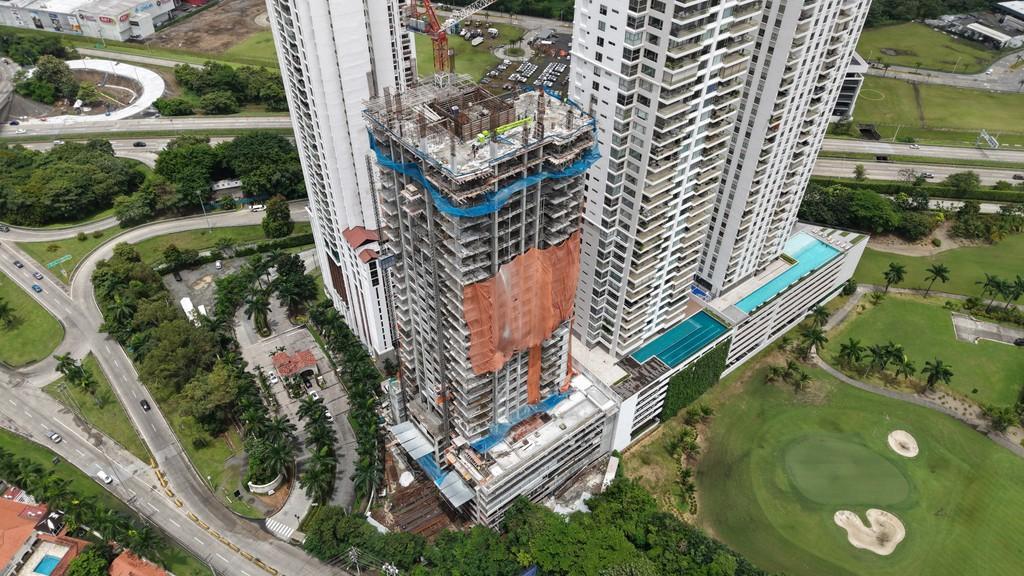
Tier One: First Sale Developer Property at $300,000 USD
A "first sale" property is a new unit that has never been lived in, bought directly from the developer or the company selling the project. It is the first time the unit has ever been sold. These properties still qualify with a minimum investment of $300,000 USD.
A unit keeps its first sale status even if the developer made legal or ownership changes on their side, such as dividing a lot, registering new construction, or moving the unit into a trust or a related company. What matters is that it was never sold to an outside buyer. This is proven with a certificate from the Public Registry, Panama's official property record, and, where needed, construction or occupancy permits. For our clients, our licensed Panamanian immigration lawyers review these records before a purchase goes ahead.
Buying before the building is finished, often called preconstruction, still counts as Tier One. The decree adds new protections for these buyers:
- Your money can be held by a licensed bank or trust company in Panama until the unit is ready, or paid in full to the developer.
- If you pay the developer in full, the developer must give you a bank guarantee covering the full amount. This protects your money if the project is not finished. The guarantee must be renewed every year until the property is registered in your name.
- You can hold residency based on a purchase agreement for an unfinished unit for a maximum of three years in total.
- If the developer fails to deliver, the investor has 180 business days to replace the investment, and may switch to a second purchase agreement only once.
Tier Two: Secondary Market Resales at $500,000 USD
This is the change most likely to surprise buyers. A resale property, also called the secondary market, now needs a minimum of $500,000 USD. A property counts as a resale if it was ever sold to an outside buyer, lived in, or rented out.
That definition is broad. A unit that was only ever rented, and never resold, is still a resale. Transactions structured only to avoid the higher amount may be disregarded by the authorities.
Before our clients buy a property or sign anything, our team works with our licensed Panamanian immigration lawyers to check the property's full ownership history in the Public Registry and confirm which tier it falls into. A property advertised as "new" may have been sold or rented before, which would put it in the $500,000 USD tier.
How Your Property Is Valued Under the New Rules
Under the old rules, buyers usually just looked at the purchase price. Under the new rules, the price is only the starting point.
Panama no longer simply uses your purchase price. It uses what we call the qualifying value of your property (the decree calls it the "net computable value"). Here is how it works:
- Panama looks at two numbers: the price you actually paid and the property's supported value.
- It uses the lower of the two.
- It then subtracts any mortgage or loan on the property.
You can use a mortgage, but only for the amount above the minimum. What is left after the loan must still meet the threshold.
- Scenario A: You pay $320,000 USD for a new unit that is worth $310,000 USD, with no mortgage. Panama counts $310,000 USD. You qualify.
- Scenario B: You pay $450,000 USD for a new unit and take a $200,000 USD mortgage. Panama counts $250,000 USD. You do not qualify, even though the price was above $300,000 USD.
- Scenario C: You pay $520,000 USD for a resale unit, but it is worth only $490,000 USD. Panama counts $490,000 USD, which is below the $500,000 USD resale minimum. You do not qualify.
Property values are also checked more closely now. You still need a certificate from ANATI, Panama's national land authority, that shows the property's registered value. MICI, Panama's Ministry of Commerce and Industries, which approves the investment, can now ask for an independent appraisal if the value looks questionable. That appraisal must be less than six months old, done by an appraiser approved by Banco Nacional and Caja de Ahorros, and paid for by the applicant. If MICI requests an appraisal, Panama Visa Expert guides our clients through the process so it does not hold up the application.
This is why Panama Visa Expert, working with our licensed Panamanian immigration lawyers, reviews the price, the property's value, any loans, and any planned mortgage before our clients buy. We also recommend investing a little above the minimum, so a lower appraisal does not put the application at risk.
Executive Decree No. 17 fundamentally alters how properties are valued and certified for permanent residency. Submitting an application under the wrong property tier or with the wrong qualifying value can result in the application being rejected or requiring correction.
Secure a Priority Decree 17 Strategy Consultation with Panama Visa ExpertThe Five Year Maintenance Rule
Getting approved is no longer the end of the process. You must keep the investment in place and prove it every year.
- You must keep your property, deposit, or other investment for at least five years.
- Every year, proof of the investment must be filed with MICI within the 30 days before the anniversary of your residency approval. By law this filing is made through a licensed Panamanian attorney, and for our clients, Panama Visa Expert coordinates it through our licensed Panamanian immigration lawyers.
- If the investment ends or is sold early, MICI must be notified within 30 days. For our clients, Panama Visa Expert coordinates this notification through our licensed Panamanian immigration lawyers.
- The investor then has 90 calendar days to reinvest, or the residency will be cancelled.
If you usually buy and sell property, this matters. For clients working with Panama Visa Expert, we review any planned sale, new mortgage, or other loan against the property with our licensed Panamanian immigration lawyers before it happens, so it does not put your residency at risk.
There is also a real benefit to staying compliant. The decree provides that Qualified Investors and their dependents may apply for Panamanian citizenship after five consecutive years of residency, subject to Panama's constitutional and naturalization requirements. You can also add children born or adopted after approval, and a spouse you marry after approval, to your residency.
The Six Month Grandfathering Window
This is the most urgent part of the new decree.
"Grandfathering" means the old rules still apply to people who acted before the new rules started. If your investment was completed or you had a qualifying binding purchase agreement in place before September 16, 2026, you may still use the old rules, provided the application is filed by March 16, 2027. This is set out in Article 19 of the decree.
Resale buyers have the most at stake. If you bought a $300,000 USD resale property before the new rules, you may still qualify at $300,000 USD if the application is filed in time. If you miss the deadline, that same property would need to be worth $500,000 USD.
For clients who acted before September 16, 2026, our licensed Panamanian immigration lawyers review the purchase documents to confirm whether the transitional rule applies, and Panama Visa Expert coordinates the rest of the application so it can be filed well before the deadline.
Two other protections apply:
- Applications already filed before September 16, 2026 are reviewed under the old rules and amounts.
- Investment approvals already issued stay valid until they expire. The new appraisal rules will not be used to reopen them, unless there are clear signs of fraud or illegal money.
Processing Timelines and Government Fees
A helpful part of the new decree is that it sets maximum processing times.
- MICI Investment Certificate: the official approval of your investment is issued within 15 business days after MICI accepts the file. It is valid for three months.
- National Immigration Service decision: within 30 business days after it receives the complete file.
- Incomplete files: must be corrected within 15 business days, or they are archived. Our licensed Panamanian immigration lawyers review each file for completeness before filing, and Panama Visa Expert coordinates any required corrections within that period.
Two details matter. The 15 day count starts when MICI accepts the file, not when it is sent. And because the Investment Certificate expires after three months, Panama Visa Expert coordinates the immigration file with our licensed Panamanian immigration lawyers at the same time, so it is ready as soon as the certificate is issued.
Government fees are $5,000 USD for the application plus a $5,000 USD repatriation deposit, which goes to the government's fund for returning a foreign resident to their home country if that is ever required. Each dependent adds $1,000 USD plus a $1,000 USD deposit. These costs are in addition to the investment itself.
You can start the application before you arrive in Panama by giving a lawyer legal authority to act for you. For our clients, our licensed Panamanian immigration lawyers file the application under a power of attorney. You will still need to give your fingerprints and photo in Panama before your residency card is issued.
Beyond Real Estate: Deposit and Securities Routes
Fixed Term Deposits
A fixed term deposit is money you leave in a bank for a set period. At any private bank licensed in Panama, the minimum is still $750,000 USD. At Panama's two state banks, Banco Nacional de Panamá or Caja de Ahorros, the minimum is now $500,000 USD. In both cases:
- The account must be opened and funded by the applicant personally.
- The money must stay deposited for at least five years in a row.
- The deposit cannot be used as collateral, pledged, or frozen.
- The money must arrive by international wire transfer from an account in your name, or from a company you ultimately own.
Securities Investments
You can also qualify by investing at least $500,000 USD in the Panamanian securities market, such as stocks, bonds, or investment funds, through a brokerage firm licensed by Panama's securities regulator. The money must now stay invested for at least five years in a row. If the market drops and your investment falls below the minimum, that alone does not break the rule. As long as you have not withdrawn, sold, or borrowed against it, you have 90 calendar days after MICI notifies you to bring it back up.
If you are considering a $500,000 USD resale property, a $500,000 USD deposit at a state bank can provide another way to qualify for residency, with no property to manage, no appraisal risk, and no ownership history to check. We guide clients through that comparison before they choose.
Common Mistakes Under Decree 17
✗Trusting a listing's "new" label
If a unit was ever sold to an outside buyer or rented out, it counts as a resale and needs $500,000 USD.
✗Relying on the purchase price alone
Any mortgage or loan is subtracted, and if the appraisal is lower than what you paid, the lower number is used.
✗Waiting on a pre September 16 transaction
If you bought under the old rules, you lose that protection if you do not apply within six months.
✗Selling or refinancing within five years
Selling or borrowing against the investment without notifying MICI and reinvesting in time can cost you your residency.
Who This Article Is For
This Article Is For You If
- You are considering permanent residency through a $300,000 USD or larger investment
- You bought or signed on a Panama property before September 16, 2026
- You are comparing new construction, resale property, bank deposits, and securities
- You want residency now and a realistic path to citizenship later
Practical Considerations Under Decree 17
- We confirm the tier before you make an offer. Our team works with our licensed Panamanian immigration lawyers to check whether a property is a true first sale from the developer or a resale, using Public Registry records and the developer's documents.
- We check the qualifying value, not just the price. We factor in any mortgage or loan, and the chance that an appraisal comes in lower than the price.
- We recommend a cushion above the minimum. A property priced at exactly $300,000 USD or $500,000 USD leaves no room if the appraisal comes in low, so we flag this before a client buys.
- We check preconstruction guarantees. Our licensed Panamanian immigration lawyers review whether the developer can provide the required bank guarantee for your full investment.
- We plan for five years from day one. The investment is treated as locked for the full period, and we guide clients through the yearly MICI requirement.
- We move quickly on grandfathered purchases. For clients who bought before September 16, 2026, we prioritize the file, because the six month window is a key protection in the decree, and it has a firm deadline.
- We start the proof of funds paperwork early. The new rules look more closely at where your money came from. We help clients identify and prepare these documents and coordinate them with our licensed Panamanian immigration lawyers, who handle the legal filing.
"Every time Panama updates an investment program, I see the same pattern. The investors who do well are not the ones who move fastest. They are the ones who check the title history, check the property's true value, and file on time. Decree 17 still leaves the door wide open for serious investors. It simply rewards the ones who plan properly."
Vicky Stavropoulos, Founder, Panama Visa Expert
Real Client Questions
I bought a $350,000 USD resale condo in August 2026. Do I still qualify?
You may still qualify under the old rules, provided the purchase was completed before September 16, 2026 and the application is filed by March 16, 2027. Our licensed Panamanian immigration lawyers can review the transaction and confirm how the transitional rule applies to your case. After the deadline, a resale property needs to be worth $500,000 USD.
Can I put a mortgage on my property to free up cash?
Only if the amount Panama counts, after subtracting the loan, is still at or above the minimum. We review any new mortgage during the five year period with our licensed Panamanian immigration lawyers before it happens.
The developer says the unit is new, but it was used as a model. Is that a problem?
It can be. What matters is whether anyone has lived in it, rented it, or bought it from the developer. Our team works with our licensed Panamanian immigration lawyers to check this in the Public Registry and the developer's documents before you sign.
Is a bank deposit better than buying property?
It depends on your goals. A $500,000 USD deposit at Banco Nacional or Caja de Ahorros avoids appraisal and ownership history risks, while a property may suit you better if you want to live in it or rent it out. We walk through both options with you before you decide.
Related Guides
Frequently Asked Questions
What is Executive Decree 17 of 2026?
It is Panama's new regulation for the Qualified Investor residency program. It was signed on September 8, 2026, took effect on September 16, 2026, and replaces the old rules in Executive Decree No. 722 of 2020.
Does the $300,000 USD Panama investor visa still exist?
Yes, for a brand new property bought directly from the developer, including units bought before construction is finished. A resale property now needs a minimum of $500,000 USD.
How is my property's qualifying value calculated?
Panama compares the price you paid with what the property is actually worth, uses the lower number, and subtracts any mortgage or loan. MICI, Panama's Ministry of Commerce and Industries, can also ask for an independent appraisal if the value looks questionable.
How long must I keep the investment?
At least five years. Proof of the investment must be filed with MICI every year through a licensed Panamanian attorney. If the investment ends early, MICI must be notified within 30 days and the investor must reinvest within 90 calendar days. For our clients, Panama Visa Expert coordinates the yearly filing and any notification through our licensed Panamanian immigration lawyers.
What if I bought before September 16, 2026?
If your investment was completed or you had a qualifying binding purchase agreement in place before September 16, 2026, you may still use the old rules, provided the application is filed by March 16, 2027.
How long does the process take?
MICI has 15 business days to approve the investment, and the National Immigration Service has 30 business days to decide once the file is complete. Preparing the documents before filing takes additional time.
Do I need a lawyer to apply?
Yes. Panamanian law requires residency applications to be filed through a licensed Panamanian attorney. For our clients, Panama Visa Expert coordinates the process, and our licensed Panamanian immigration lawyers handle the legal filing.
File Your Qualified Investor Visa the Right Way
By Panamanian law, the Qualified Investor Visa must be filed through a licensed local attorney. Panama Visa Expert coordinates the entire process for you, and our licensed Panamanian immigration lawyers handle the legal work and filing. Together, we confirm your property tier, calculate the value Panama will count, and prepare a complete and correct file. Book your appointment now to protect your investment and your residency before the deadlines close.